A location story · 05
Planting the Slow Orchard
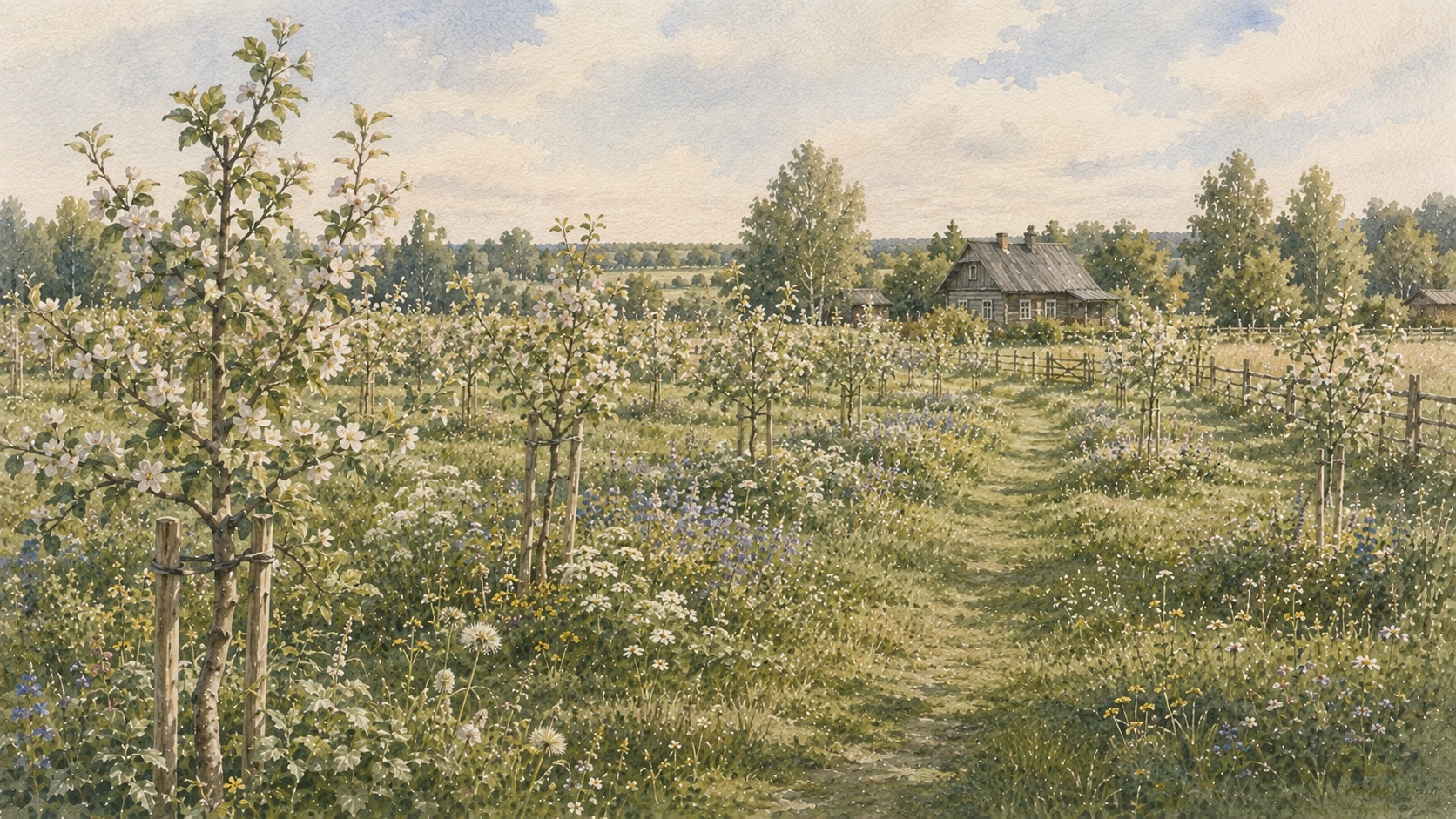
An orchard refuses to hurry. It may be the clearest test of this whole idea: plant something before there is shade, make room for harvests you cannot photograph yet and return often enough to notice the small changes.
Three notes from the story
- 01
Choose fewer trees
The first plan always looks too sparse. That is deliberate. Each tree needs air, light and enough ground around it to become itself rather than a mark in a crowded drawing.
- 02
The years between
While the trees are young, flowers and grasses hold the space between the rows. The orchard is not unfinished during those years. It is simply living at a different scale.
- 03
The first shared table
Our favourite drawing is not the one with the biggest harvest. It is an early autumn table with a small basket of apples, bread, tea and empty places for people who have not arrived yet.
A small scene to keep
The first apple afternoon
The first harvest will probably fit into a few baskets. That makes it easier to treasure. Children compare the smallest apples, someone’s aunt cuts the bruised fruit for a cake and a neighbour shows a teenager how to twist an apple gently from its branch. Nobody needs to be an expert to have a useful pair of hands.
Later, the long table is covered with a linen cloth that never sits perfectly straight. There is warm cake, mugs of tea and a bowl for every apple that deserves another look. Families talk across generations, friends make plans for spring and a person who arrived knowing nobody leaves with a jar of jam and two new names. This is the kind of abundance we hope the orchard grows first.
“An orchard is a way of making plans with people you may not have met yet.”