A location story · 03
Restoring the Pond
A pond is easy to romanticize from a distance. Up close, the work begins with less photogenic questions: where the water comes from, how it leaves and what already grows at the edge. Our concept starts there.
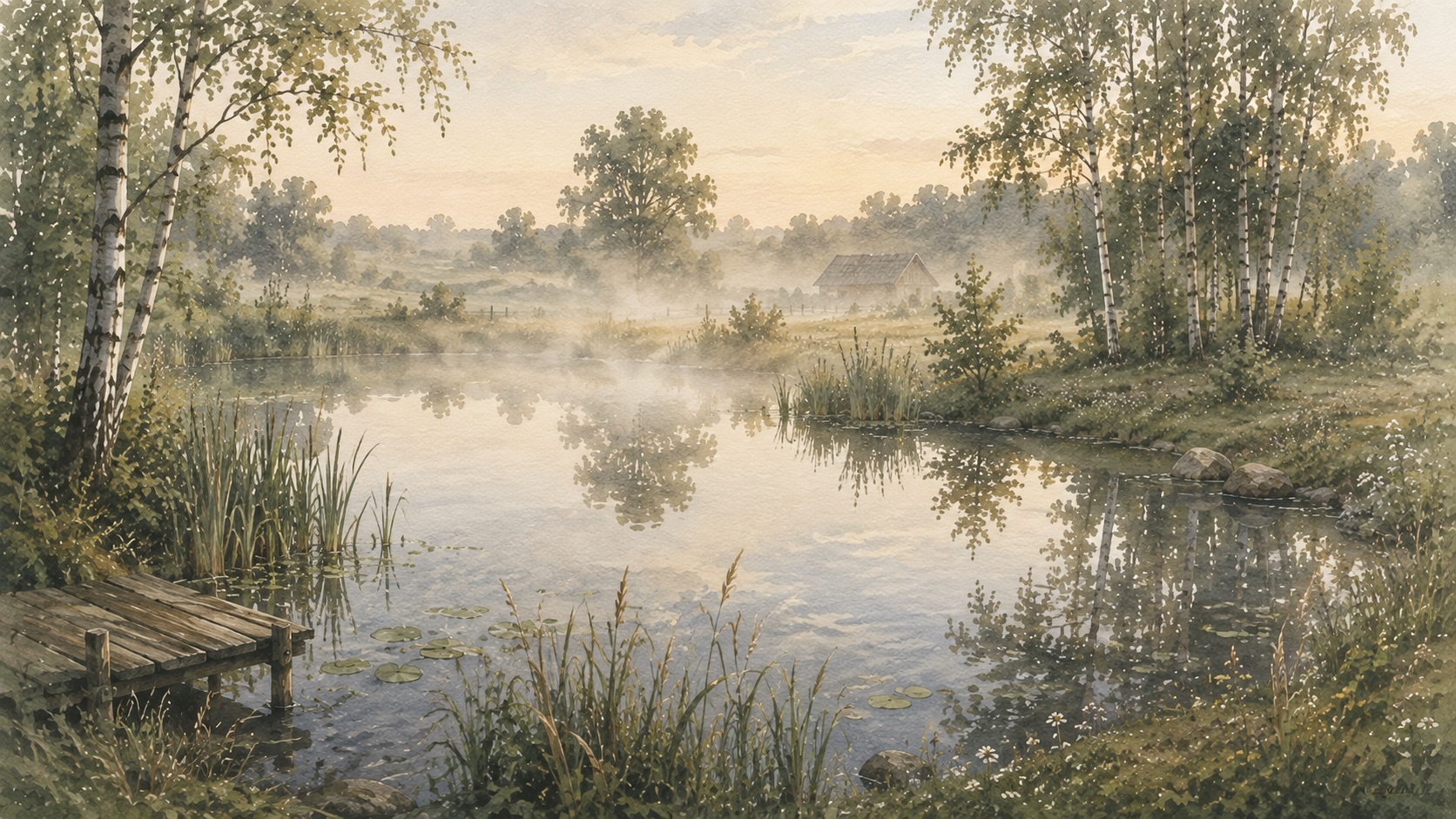
Three notes from the story
- 01
Read the water
The first season is for watching. Rain, dry weeks and spring thaw each leave a different line on the bank. Those ordinary observations matter more than choosing the shape of a future jetty.
- 02
Repair the edge
The drawing grows softer at the margins: reeds, grasses and a path that steps back from the water. The pond does not need a decorative border. It needs a living one.
- 03
One place to sit
Only then do we add a simple timber platform and a bench. Nothing circles the whole pond. There should still be a far bank that belongs to water, weather and whatever arrives there first.
A small scene to keep
The slowest walk of the day
A family sets out after lunch and takes half an hour to cover a path that could be walked in five minutes. One child has found a feather, another is certain they saw a frog and the adults have stopped trying to hurry anyone along. An older visitor waits on the bench by the reeds, listening to the same small discoveries arrive one by one.
The pond gives people something rare to share: a silence that is not awkward. Friends can sit with their shoes dusty from the path, parents can breathe while children watch rings spread across the water and a visitor on their own can feel part of the afternoon without joining a group. At dusk, everyone leaves a little more quietly than they arrived.
“The pond becomes more generous when we resist the urge to use every metre of it.”