A location story · 02
The Old Farmhouse
We do not yet know which old house, if any, will become part of the real farm. This story is a promise about how we would look at one: slowly, before deciding what to repair and what to leave alone.
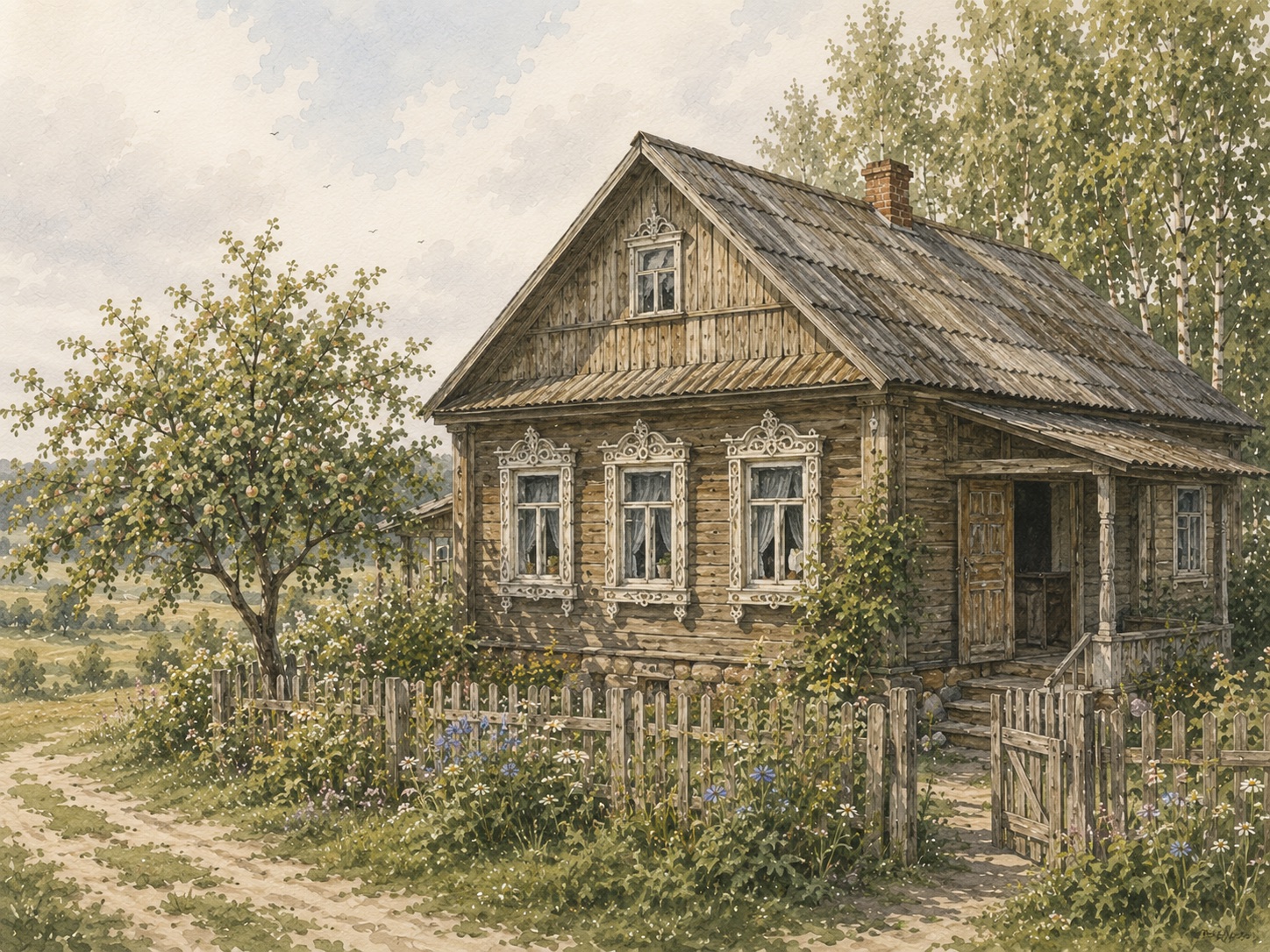
Three notes from the story
- 01
The first walk through
Before mood boards and floor plans, there is a careful walk: the sound of each board, the angle of the roof, the window that still opens. A house tells you what it needs if you give it time.
- 02
Rooms with a purpose
The imagined kitchen is small enough for conversation. Boots have a place near the door. Wet coats do not cross the whole house. Beauty comes from things working well, not from hiding every mark of age.
- 03
Light in the windows
In the final drawing, evening light reaches the porch and one lamp is left on in the kitchen. It is not a grand transformation. It simply looks as though someone has come home.
A small scene to keep
The kitchen everyone drifts toward
The house feels most alive on a wet afternoon. Boots of every size gather by the door, a child is given the important job of carrying spoons and someone opens the stove to check a loaf that is not quite ready. At the table, an old family recipe sits beside a new notebook. A neighbour who came alone is handed a warm cup before they have time to say no.
There would be no perfect room that nobody is allowed to touch. The window seat is for reading and napping, the wide table can take flour, crayons and elbows, and the porch is allowed to collect baskets, muddy treasures and half-finished conversations. A family can be noisy here; a person who needs quiet can find a smaller corner. The house welcomes both without asking either to pretend.
“Restoration should feel less like erasing time and more like making room for another chapter.”